
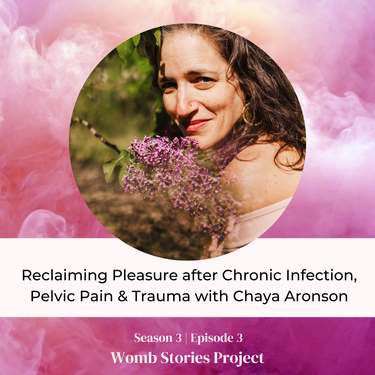
Chaya Leia Aronson of Your Sacred Pelvis shares her powerful journey from chronic bladder infections and interstitial cystitis to living pain-free and deeply connected to her womb.
After years of pelvic pain, invasive medical experiences, and being told there was no solution, Chaya turned to natural healing, including herbal medicine, diet and lifestyle changes, Mayan Abdominal Massage, and Yoni Steaming. Through this work, she not only resolved her symptoms but reclaimed pleasure, nervous system regulation, and trust in her body.
We discuss how pelvic pain and uterine disorders are often rooted in trauma, and Chaya illuminates how trauma can arise from a much broader range of experiences than we typically consider, including a hard fall to the sacrum.
Through natural healing practices like yoni steaming, which supports deep nervous system regulation and invites gentle emotional release, we are able to move through pain and towards pleasure. Chaya speaks to the fact that activism is best sustained by joy, pleasure, and a regulated nervous system.
This episode is a testament to the possibility of moving beyond chronic pelvic pain and dis-ease in your own womb healing journey. A hopeful and inspiring story offering natural remedies, ancient practices, and wise teachers within the world of holistic women’s reproductive health.
About our Guest
Chaya Leia Aronson, RN BSN offers both in person and virtual healing experiences that blend hands-on bodywork, somatic practices, and gentle lifestyle and herbal support to help you reconnect with this powerful part of yourself. She utilizes Maya Abdominal Massage, Holistic Pelvic Care™, Yoni Steaming, movement and posture practices, and holistic coaching to help you reclaim pelvic health and wellness.
Connect to Chaya on Instagram.
Learn more on her website.
About Kitara and Womb Stories Project
Womb Stories Project is the in-house podcast of KitaraLove.com, your one stop shop for everything you need for safe and effective Yoni Steaming at home.
KITARA
Kitara is a yoni steaming company made up of devoted womb healers. Our passion for steaming is rooted in the profound healing we’ve experienced ourselves and witnessed in those we support. We are devoted to supporting your womb health and healing journey.
Our founder, Kit Maloney, holds a Masters Degree in Gender & Social Policy from the London School of Economics and has spent the past two decades as a thought leader on victim advocacy, pleasure activism, and holistic womb health and healing.
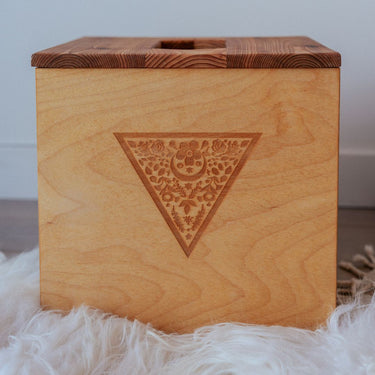
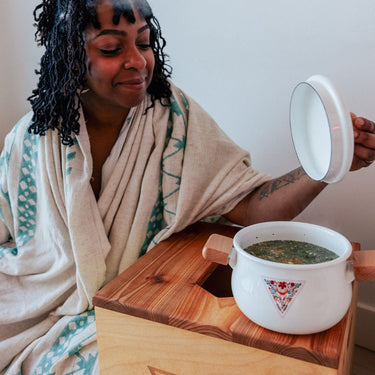
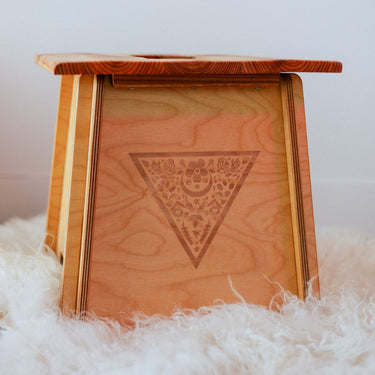
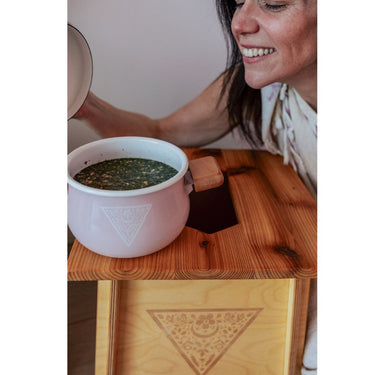
Kitara provides beautifully designed, expertly crafted tools for safe and easy in-home yoni steaming.
Shop yoni steam seats
→ https://www.kitaralove.com/collections/seats-and-set-ups
Learn more about the benefits of yoni steaming
→ https://www.kitaralove.com/pages/benefits-of-yoni-steaming
Follow Kitara on Instagram → https://www.instagram.com/bykitara/?hl=en
Times Stamps:
-
5:40 -14:50 How to Heal UTIs Naturally: Yoni Steaming + Mayan Abdominal Massage
-
14:50-18:03 Trauma as the Root of Womb & Pelvic Pain
-
18:03- 19:10 Holistic Support for Endometriosis
-
19:10-2:00 Yoni Steaming for Nervous System Regulation
-
21- 22:27 Using Herbal Allies in Yoni Steaming
-
22:27 - 29:41 Healing Generational Trauma in the Body
-
29:41 - 32:13 Releasing Ancestral Grief & Pleasure Activism
-
32:13 -35 Yoni Steaming Benefits: The Miracles of Yoni Steaming
Transcript
Kit Maloney (00:00)
Chaya thank you so much for being here.
And I invite him this query of what does it mean to you to be asked about your womb story and your relationship to your womb?
Chaya (00:19)
Thank you so much for hosting me here. And thank you so much for that question. I noticed when I hear it, my brain goes in a million different directions. So it's already an invitation to pause and listen to my womb. it's like the first response from there is what is it like
now to have a womb, now that I'm in right relationship to my womb and I'm in health with my womb. And just a natural place to go to listen to what's next. Yeah. And then it took experiencing so much pain and discomfort in that part of my body to know that that's where I could land.
Yeah, so in terms of my own personal experience of having a womb, it's so interesting in the moment. It brings up a lot of emotion to think about like the five-year-old self that started to have chronic bladder infections as a five-year-old and had many medical tests on my bladder that nobody explained to my five-year-old self like exactly what was gonna happen or that my mom wouldn't
be next to me when I had a catheter inserted and what would that feel like that it would hurt that nobody explained these things to me and it felt scary, it felt lonely. I think when I look back on that part, which was the beginning of, you know, it was my bladder and the bladder lives right in front of the womb. And so
when you have that kind of a trauma, like, ⁓ you know, when there's trauma, we wanna always look at intention, ⁓ of course. And like the body doesn't actually care what the intention was, right? Like that wasn't any different to my body than having a sexual trauma at a young age. My body doesn't care what the intention was. My cells don't care what the intention was.
This was a very early experience of invasiveness, lack of consent.
this story could be a long story, but to condense it, right? So I had chronic UTIs as a very young child. I took low dose of prophylactic antibiotics from age five to age 12. So of course, then that became a gut journey too, as I got older. And then it worked itself out. And so I came off the antibiotics. I lived without
bladder infections for some years. And then I had sex for the first time and I got a severe bladder infection that landed me in the hospital with a kidney infection. first it was bladder infections and then the first time I had the experience that is theoretically about pleasure, I ended up in the emergency room.
And so sex and pain got intricately woven at the very beginning of my sexual journey. And then I did the thing that lots of women have done, like, okay, you get the bladder infection in college, so you go to the clinic at the school, you take the antibiotics, and then you get that fun yeast infection experience, and then you repeat, right, over and over again.
So I did that for a while. And then one time I went to the clinic and they finally actually called me back. Usually they just send you home with the antibiotics and they said, you don't actually have any bacteria. There's no bacteria growing. So then I had to have more tests, more painful tests. And ultimately they diagnosed me with a condition called interstitial cystitis. I don't know if you've ever heard of that. It translates to
inflammation between the cells of the bladder. So they have some big science word that means we don't know why you have inflammation in your bladder, but you have inflammation in your bladder and there's nothing we can really do about it. So if you've ever had a bladder infection before, it feels like a bladder infection, but there's no treatment. And so I had what felt like the acute symptoms of a UTI.
for about a year and a half. the extreme acute, every 20 minutes sometimes I had to pee. I was getting up four times in the night to pee and it hurt every single time. And oftentimes I thought I had to go, but nothing really happened. And it was just on fire
And so I had a pretty intense healing journey. I was in college, I didn't know my ass from my elbow in some ways. I was drinking too much beer because I could. I started to, one time I went to a clinic, a bladder clinic and I saw in the gift shop a book about natural healing. And I hadn't even heard of natural healing. You know, I grew up on Spaghetti-Os and mac and cheese. Like somehow we all survived, right?
Kit Maloney (05:35)
we're really grateful for the books along the way that at times felt like they jumped off shelves into my hands because there's been too much mac and cheese.
Chaya (05:46)
Totally. I mean, it was way before you could Google interstitial cystitis and find anything worthwhile. So it was really just me trying to figure it out. Any doctor that I could see would just say like, you can have these medications. Your hair might fall out and it might cause liver damage, but this is what we've got. And so was like,
all right, I'm gonna figure this out or I'm out. actually two people that Jack Kovorkian assisted in suicide had that condition. And so I just made it my job. I was in nursing school at the time too. So I had a very kind of intensive rigid schedule. I just made it my job to figure it out. again, there's a lot I could say in between. And ultimately I had done
a lot of dietary changes, a lot of lifestyle changes. I started to meditate and do these guided visualizations that I just made up by myself because there was nobody, you I was like, I'll breathe in cool blue light into my pussy and I'll exhale anything that's red and inflamed, you know? And I did that twice a day.
You know, there was a whole like year plus that I couldn't even have sex. Sex created so much more pain. And so when I came to the work, I was like, I could manage like this. And now I don't have bladder pain anymore.
I live a pleasurable existence in my from pretty extreme constant consistent pain. And so I really, it's just my joy, honor and privilege to help other women get there too. When people with pelvic pain like that come to me and they've...
know, most doctors will tell you there is really no solution. Even some holistic doctors told me that when I was on the journey. So to say I can't promise that we can take all of your pain away, but I don't have any pain anymore.
I've been pain free for over, well over 10 years now, with the exception of to be frank, and this is not a judgment about the COVID vaccine, whether you get it or you don't get it, you know, I'm not here to say that. I know that I got it. And then I had a resurgence of my pain for a period of time.
And I knew what to do about it when that happened. Like it didn't last a year. It wasn't nearly as extreme because I had a different baseline by that point. I knew I need a lot of the soothing herbs. Like I need a lot of marshmallow root. I need to have it in tea. I need to steam with it, right? I need to, okay, like coffee for anyone with that kind of pelvic pain is like a no, you just don't drink coffee.
And I still don't really drink it often, but I once in a while like to enjoy a cup of coffee and okay, for a month, I'm not gonna drink any coffee. I'm not gonna do the things that I know irritated me when I was in that condition. And I know what those things are and I know how to avoid them. it's like, what do you need to clear out and what do you need to bring in? And those are often the questions to ask to our wombs when we're out of balance. What do we need to clear out and what do I need to bring in?
it's like another in and out place, like into our mouths, into our yonis, like what goes in, what goes out. And we get to consciously decide.
I mean, there's a lot there in relationship to food too, because I can say that I felt sometimes on my journey of healing that I got almost out of balance in my relationship to food because there was so many very specific and somewhat innocuous things that seemed to irritate my bladder, like food additives, like sodium benzoate or potassium sorbate
those seemed to be irritants. it felt neurotic to me about eating. Like I felt stressed to go to a potluck or to eat at a restaurant. And that's its own thing that, you know, if I were to go through that journey now, I don't know what that would be like. But it is its own kind of eating disorder when you're in such a...
such a scramble about what's working, what can go in, what can't. And then it brings so many questions about how do we be really discerning and then how do we just let go and live in this world?
Kit Maloney (10:15)
Yeah. And I'm so glad and supportive of the awareness of food as healing and food as potentially exaggerating or exacerbating illness and disease. And
that
empowered knowing of your body to say, okay, we need to come back into balance, I know how to support you is so different than the spin that we can get into about different things. And right now we're in this cultural moment of food being the thing that we do have some cultural acceptance around. So you can go to the potluck now and say, I can't eat that, I have an intolerance or an allergy. But right now we're at least not saying like,
I'm just gonna have to steam afterwards.
Chaya (11:01)
Right, or just like invite our bodies to embrace what we're choosing to eat.
Kit Maloney (11:08)
really come into a different relationship with the appreciation of how I eat is just as important, if not more important than what I eat.
Rachel Koch (11:16)
I'd love to hear more about how your work started to evolve from from your healing journey.
Chaya (11:26)
Well, it was such an interesting choice that I made in nursing school to divert my attention from nursing to becoming a womb healing practitioner. And I did work for a few years in a hospital setting and I appreciate that time. really just felt so clear that I wanted to
do this work and support other people to find health and balance in their wombs and their bladders, more comfort, more pleasure, Because when I think about my own experience of going from, can't have sex or eat things that are delicious, Which are kind of the same in some way, right? In out, yes, no, pleasure denial.
And now I can eat really healthy food and I can eat whatever I want basically without having to think too much about like, this gonna hurt my body? And I'm like a multi-orgasmic woman who has a huge capacity for pleasure. And I just want that for all of us. Yeah.
That's our birthright, actually. And our pleasure, I feel like our pleasure could just heal all the injustice in the world, truly, which doesn't mean, like, let's not be politically active right now, right? And that could be part of our activism is embracing the pleasure in all kinds of ways, from smelling the roses to having many orgasms.
And everything in between. So I know something we talked about before was like, pleasure, trauma, pleasure, trauma. And sometimes we need to hold them all together. And we do live in a culture where there is a lot of oppression of different kinds for women and womb bodies and trauma of different kinds for women and womb bodies. And
I have seen a lot of that through my work, having experienced my own womb story journey and then worked with so many women with pelvic pain of similar and different sorts. Almost every single woman who's come to me with that kind of pain has had some kind of early physical or sexual trauma. And that could be, you know,
sexual violation, could be medical violation, it could be a very intense fall to the sacrum, right? Totally innocuous and it happens. had clients who have debilitating menstrual cycles and ultimately when we did some journeying, connected it to I'd ask, I asked this in every session.
or in every initial session, have you ever had a severe injury to your sacrum or tailbone? And I can't tell you how many women initially say no, and then we kind of move through and then suddenly they say, there was that time, these are two true stories. There was that time when I was in whatever grade and a boy pulled the chair out before I sat down in those concrete floors in the elementary school. And I just landed with so much force on my tailbone.
And everybody told me I would be fine, but it was excruciating to sit for about a month, I think. Or my very close friend who was the first person I worked on after I did my training. And I asked her that question, have you had a fall to your sacrum or tailbone? And she said, no. And then I just remembered, because we had been friends, that she had told me about a horse accident that she had when she was younger.
and it didn't even catalog for whatever reason, because she's like, I fell off horses so many times, but she had had an accident where she fell off the horse and then the horse fell on her. And she's like, I think the only reason why I didn't end up paralyzed was because it had been raining. It was so wet that the earth absorbed some of the impact, but I thought I was paralyzed when it happened.
And it was so extreme that I had facial reconstructive surgery, right? So these injuries live in such a subconscious place. And then, I mean, both of these friends, clients, one was a friend, one was a client, had extreme menstrual cycles like vomiting, ⁓ passing out, these kinds of things. And through...
through mayan abdominal massage, through steaming, through the way these things work together, they started to ease. The cycle started to ease and
Sometimes those kinds of symptoms can indicate like a more extreme pathology like endometriosis or something like that. And I don't diminish the intensity of that kind of diagnosis and the impact of that kind of diagnosis. there is still a lot we don't know about that or how to treat it.
And I have with endometriosis with fibroids, some of these more complex struggles, I have seen improvement in symptoms.
I have seen complete reversal of those symptoms. I've seen women who have debilitating menstrual cycles who really commit, you really have to be all in.
and this is where I think steaming can get really deep into the nervous system in a way that invites the parasympathetic on and the sympathetic off, it soothes the sympathetic so that it's not we're in fight or flight, extreme pain driving the bus, you know?
It's like, okay, honey, let's just calm down because the vagus nerve actually runs right into the cervix, And so the steam, and this is something, I love the evolution that I've seen in steaming over more than 15 years now. And there's so much specificity in formulas and, being so specific about formulas. And I think that can be so helpful.
And I also think steaming can be so easy. And if you don't have, if you think that you don't have anything that you need to steam, you actually have everything you need to steam right now. like a handful of calendula flowers in your water, a pinch of basil. sure, you could get more specific. That could be beneficial. And use what you have if you want to regulate your
your parasympathetic nervous system right now. when I would steam when I was living in so much pain, and I know many of my clients have said this too, it's like, okay, now my nervous system is relaxed enough that I can get my higher level thinking online to consider how might I continue to evolve my healing journey?
steaming can be such a beautiful invitation to just pause and slow down, even if you don't have all the right herbs right now.
Kit Maloney (18:43)
sure,
I think that if I really go back to the first steam a piece of why I felt such trauma healing was the relief of being dropped out of the mind into the womb, which.
when you're really there is inherently loving.
that gentle invitation and truth of being dropped into the body in a different way was the healing of that moment. And as a founder of a company that sells products for Steam, I am very much on the side that you're sharing of like, you also don't need to buy anything. It's all here in your home.
it's nice to steam.
with certain beloved products that I've created. And we should never let that hold back from the truth that we really want this to be as accessible as possible.
Chaya (19:37)
Yeah, and then there's so much seasonally. Like I mentioned earlier when we spoke, I'm in perimenopause now. And so we don't know when the monthly moon is coming and it hasn't come in a few months. so last night I was like, I need to steam. I'm feeling premenstrual and ready to steam. And I had my blend inside, but I was also like, it's New England, it's May.
Where's the mother wort Well, you know, it's like I have mother wort and mugwort They're like, bring me, bring me, I want to help. Both of them are very much like that. They have like the hands. They're like, we're here to help.
Rachel Koch (20:21)
So magical. And just feeling this like call to orient a little, it's like we step into speaking about trauma and healing in our wombs and seeing how a lot of the stuff we have in our womb space is connected oftentimes to trauma.
And I love what you're sharing, Chaya and really bringing forward is that we can widen what that means. And I think that that could bring some relief. It certainly does to me and to those experiencing this, that like even falling out of your chair could cause this kind of trauma. And I really wanted to tease that out right, a lot of things could be the source, right? And
One of the big parts of healing, and we can kind of get into more of it that you're bringing forward about steam that I think is so true, one of the big pieces of healing trauma is re-regulating the nervous system, And getting out of fight or flight, getting into the parasympathetic, coming out of the contracted kind of emergency state
And I think you're so right, that steaming is just such a powerful practice.
Chaya (21:31)
practice for
that.
Yeah, it is making me think about some of the elder clients that I've had in relationship to trauma and how that, you know, it's generational, right? So our elders now are the age that they are and the culture of what they lived through and threading the red thread through from their
childhood into their elderhood, So many have common stories I ask also everybody about what their first moon time was like for them and how many it was traumatic. Either they got or they didn't know that that was going to happen. They didn't know about menstruation. And so one day they just went to the bathroom and they saw blood and they thought,
I'm dying and I don't know who to tell. I need help. I don't know who to talk to because there's a shame around. There's blood coming out of my down there. Who can I tell? Right. And then you carry that thread through for this particular generation of our elders right now. Then they went through pregnancy and childbirth and raising.
sometimes many small children without any help, prolapse, Because prolapse almost, and this is something Rosita used to say all the time, prolapse is about not feeling supported energetically. the uterus has all these ligaments that holds her in place in the pelvis and they get overstretched.
when we, not overstretched, they stretch. They're designed to stretch when we get pregnant and come back. If we have multiple pregnancies that are closer together than two years, those ligaments don't come all the way back. And then these women are mothering mostly alone pregnant, with a tiny child. It's literally the bottom falling out,
The birth stories that I've heard from that generation, wow, one of my own teachers she told me this story, she just wanted to be in the cave, because this is what we do when we give birth, we go into the dark cave. So she locked the door in the bathroom and then when they convinced her to come out, they tied her to the table and she gave birth like that.
Right, and that's not a unique story, I'm sad to say. And so then these women come to elderhood and they have prolapse. And if we think that their experience is like separate from us because it's a different generation, because we lived inside of those wombs.
We felt that trauma and probably you've read the body of work, like all of the unripe follicles that we'll ever have develop inside of us when we're four months in utero in our mother's bellies. So that means that the seed that became you and me existed inside of our grandmother's womb.
Right. So we felt that imprint on a very visceral way. And so there's pain to that and there's beauty to that because it connects the thread back. And then when we know that we hold their stories and then we bring it forward. We get to bring it forward in a new way. So I think it's so important to tell these stories, to share our stories, to share our elders stories, to remember.
what they lived through so that we can hopefully heal through how we show up with our children in our communities. And I know I can say, I don't know if this is true, is this true for everybody? Almost every time I steam, I end up having a good cry.
Something I haven't shared is that I also do a lot of grief ritual work. and that came from doing a lot of womb work because I've started to see so viscerally how much our grief lives in our wombs and creates that stagnation like consolidates itself and then we can call it diagnosable disorders, but it's really consolidated pain.
And so I don't pathologize at all that I cry every time I steam. sometimes it's connected to ancestral trauma that my tears are coming from. Certainly being a Jewish woman and witnessing what's happening, right? I've had a lot of ancestral grief come through around all the different facets of how this is happening for all the different.
people who are being harmed and threatened.
Rachel Koch (26:26)
It's another big piece of the trauma healing. It's regulating the nervous system, getting down into the parasympathetic, having space for emotional release, right? Which the steam is this invitation to feel and be and the herbs and the steam, the gentleness, the ancestral.
lineage of the practices themselves think hold us in that space of this is your time, this is your time to be held and to feel and to release.
Chaya (26:58)
Exactly. And that's part of the regulation. It's not about being stoic, It's about I'm pausing. I'm giving attention to my body in a way that I don't do every single day. What's alive right now in my body?
We're always so rushed in our culture. We don't necessarily get to touch like what's in our pain body. And when we can move what's in our pain body out, it actually expands our capacity for joy, pleasure, and activism.
Rachel Koch (27:32)
Yes.
Kit Maloney (27:33)
I felt that in the ancestor and my ancestral steams I feel like I've been connected to the grief and also the love,
It feels like when I feel into it, it's like the joy of my grandmother's witnessing me being able to have a different relationship with my womb in this lifetime.
Chaya (27:56)
Yeah, they really want our liberation. It liberates them actually too.
Kit Maloney (28:02)
Yeah, and thank you for holding that because it the joy and the pleasure and the activism that trilogy and the way they dance together and the way that they are released through the healing because sometimes in trauma healing work, sometimes it becomes enticing to stay in a victim consciousness of it, right.
And I think this is another really powerful component of steam because it lets us also move so gently that we can transition into the joy when that's available at the right pace so that the healing itself doesn't carry the thread of harsh hardness that's actually digging us further into the trauma.
which sometimes happens in other modalities. And I feel like Steam allows it to move in a different way.
Chaya (28:49)
Yeah, just allows us to soften.
Kit Maloney (28:51)
Well, I'm going to presence this beautiful sentence that I read in some of your writing that said, have seen and experienced literal miracles from this practice. And I'm curious which of those miracles might ping to you in this moment that would be joyful to share.
Rachel Koch (29:16)
Yeah.
Chaya (29:16)
Like there's so many. I'm remembering one client that was really early in my practice who had had two pregnancy losses. And we did three sessions with Steams and then she got pregnant and had a beautiful pregnancy and birth. Remembering a woman who had debilitating cycles who is like
just in pleasure in her cycles now. She loves bleeding. She looks forward to her bleed. She used to dread and fear it. And now she looks forward to it.
Yeah, I think it was three or four years ago and I'm 44 now. And so like three or four years ago, I stopped cycling for six whole months. That time and this most recent three months stretch have been the most irregular, the longest stretches I've ever gone without bleeding and...
I was concerned because early menopause can have impact for our aging. And I went to the gynecologists and of course they're like, well, we'll just put you on HRT. Which, you know, that's another conversation. I'm from the research I've done. I'm not entirely against HRT. It's a bigger conversation and I just want to name, I'm not totally against it. And I wasn't there.
in my life that that's what I wanted to do in that moment. And so I steamed like I went home and I steamed it was this time of year and I motherwort and mugwort and roses. mean the roses I just had dried but the mugwort and motherwort were fresh and I steamed every day for five days and I started bleeding.
Was it the steam or was it just about to happen? Was it a miracle? Was it the steam? We'll never know.
Kit Maloney (31:12)
Yeah, but steam is like, it was enjoyable. So it's not like there wasn't a reason to do it too right if somehow this was all correlated, there wasn't ⁓ a negative aspect of it. It's not like you had to
Rachel Koch (31:10)
Yeah.
Chaya (31:28)
Right, there's no...
⁓
And it's actually easy and it's not that time consuming. know, sometimes we get like, ⁓ it's gonna take so much. I mean, that first one took me like weeks to set up, but we have more information now.
Rachel Koch (31:44)
Ha ha ha!
Kit Maloney (31:45)
Now
because you brought that up, I do have to share this story. It's a really, really early bit of the origin story of Kitara But when I was falling in love with Steam in 2018, I went to a couple of friends, Instagrams, and pinged them about their Steam setups. Because one, I was curious what I was missing. I just was at the point where I did want to invest in something.
And two, I had this hunch that maybe I could support the spread of steam through products that made it easier to do at home. And one had the chair that you mentioned with the hole. And that's why I was like, it's the lattice because that is such a good little thing. You can get them at garage sales and stuff often. Totally. So I had that vision. And I was like,
and And then⁓ well, Chaya thank you so much for your work and for sharing with us. And I'm not physically too distanced from you. So I hope someday maybe to get into that space that I'm looking at through the interwebs in person.
Chaya (33:13)
Thank you so much for hosting me. It's really been a pleasure to connect with both of you.